Solutions: Apparel Industry Supply Chain & Retail Tracking
- Share
Apparel Industry Supply Chain & Retail Tracking

Apparel Industry Supply Chain & Retail Tracking
Traditional apparel supply chain operations rely heavily on barcode scanning and manual ledger recording, creating fragmented information across production facilities, distribution warehouses and offline retail outlets. Inventory discrepancies, inefficient stock audits, delayed replenishment and unmonitored grey-market parallel goods have long restrained brand revenue growth and operational optimization.
The RFID-based tracking solution builds a unified digital tracking network throughout apparel circulation. By embedding passive RFID tags for individual garments, deploying fixed and handheld reading devices at key operational nodes, and adopting middleware to connect existing enterprise management systems, brands achieve end-to-end item traceability.
Meanwhile, self-service verification links and real-time alert mechanisms cut down repetitive manual work, reduce human-caused inventory loss, enable scientific stock allocation across regions, and greatly upgrade supply chain agility as well as consumer shopping experience. Enterprises can implement the system incrementally with low reconstruction costs, gradually realize refined inventory control, data-driven merchandising and full-chain risk prevention.
I. Pain Points of Apparel Industry Supply Chain & Retail Tracking
1.1 Low SKU identification efficiency & poor real-time matching capability
Apparel brands manage massive SKUs differentiated by size, color, fabric and batch. Most warehouses and stores rely on manual barcode scanning or paper record keeping; barcode scanning demands line-of-sight reading with slow single-item processing speed. The system cannot synchronously bind garment goods data with order, customer and warehouse location information, and bulk scanning of dozens of apparel items in one operation is not supported.
1.2 Isolated independent business systems with data barriers
Apparel warehouse management, logistics distribution, e-commerce order, retail store operation and VIP membership systems operate separately. Inventory, sales and customer consumption data cannot be shared across different platforms, leading to repeated manual data entry, inconsistent stock figures between warehouse and stores, and low overall supply chain operation efficiency.
1.3 Discontinuous full-process apparel tracking
The apparel circulation chain covers factory warehousing, cross-regional logistics, store receiving, in-store display, fitting and final checkout. Traditional barcode technology cannot record garment status at every circulation node. It is hard to trace lost/misplaced inventory, locate slow-moving stock, and conduct anti-counterfeiting checks for parallel imported goods.
1.4 Difficult coordination of cross-region business flow
There is no unified data collection standard for apparel tracking across multiple warehouses, regional distribution centers and chain stores. New digital management systems often meet compatibility issues when interfacing with legacy ERP, CRM systems of different franchise retailers and production factories.
1.5 Slow manual verification during stocktaking & easy store congestion
Manual stocktaking and goods checking in retail stores create long work cycles and occupy staff working hours. When store staff cannot find target SKUs quickly, customer waiting time extends greatly, producing crowded fitting areas and checkout zones and hurting shopping experience.
1.6 Weak early warning capability for abnormal inventory
Defective goods, misplaced stock, stolen items and expired seasonal inventory cannot be automatically identified during logistics transit or in-store display. Merchants have to arrange extra manual inventory audits, which brings capital loss, inventory shrinkage and operational safety risks.
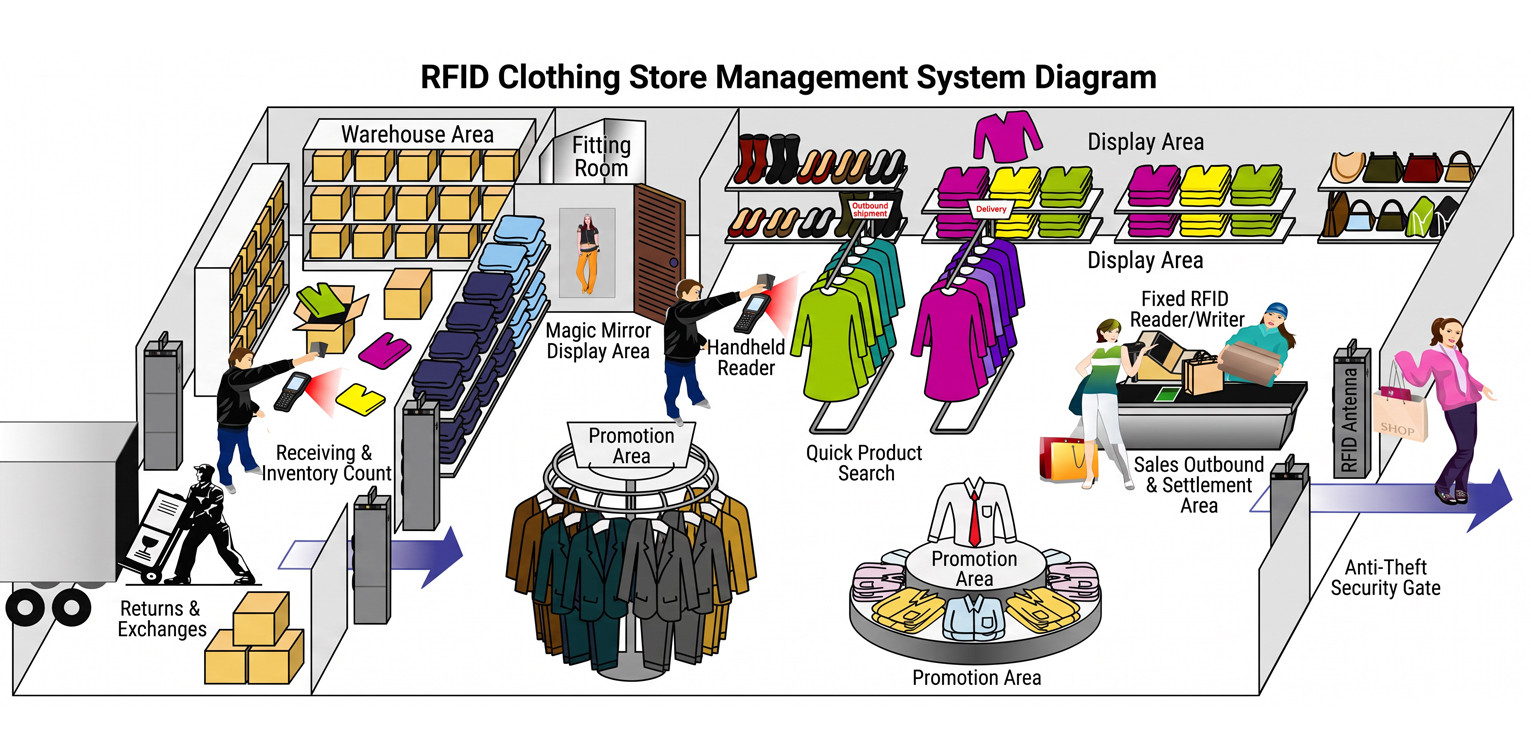
II. Solution Overview
2.1 One-to-one binding of garments and order/customer data at production labeling stage
Deploy RFID label printers at garment factories and warehouses. While printing outer packaging tags, the system writes SKU specifications, production batch, order ID and supplier data into passive RFID tags to complete data binding. All garment data is uploaded to the cloud backend platform synchronously to support end-to-end process tracking.
2.2 Full-node RFID collection for continuous apparel tracking
Install fixed RFID readers and antennas at warehouse inbound/outbound gates, sorting workstations, distribution transfer stations and store receiving zones; equip warehouse and retail staff with handheld RFID readers. The whole movement path of each garment is recorded in real time, enabling fast retrieval of misplaced inventory and automatic capture of abnormal inventory tags; abnormal goods will be flagged with sound and visual alerts and transferred to manual inspection areas.
2.3 System middleware to break data isolation barriers
Provide dedicated matching middleware to seamlessly connect the RFID platform with existing ERP, CRM, e-commerce order and membership management systems of apparel enterprises. It realizes unified collection, transmission and sharing of inventory and sales data, eliminates repeated manual entry, and lifts overall operational efficiency across warehouses and retail terminals.
2.4 Dual-verification self-service stock check & fitting assistance channel
Build self-service verification zones integrated with RFID reading + smart fitting mirror modules. The system cross-checks garment RFID tag information and customer membership data twice; only matched data can complete fitting record logging. If verification fails, the system will guide customers or staff to use handheld RFID readers for supplementary manual checking.
2.5 Low-cost, easy-to-deploy overall technical framework
This solution adopts recyclable passive RFID tags; large-scale renovation of original warehouse racks, store shelves and conveyor equipment is unnecessary. Only modular RFID reading devices need to be added. Enterprises can choose partial or full deployment based on their existing warehouse/store conditions, with excellent scalability and compatibility for multi-brand franchise networks.
2.6 Real-time information push and whole-process inventory safety supervision
The backend system sends real-time inventory turnover, slow-moving stock and out-of-stock alerts to operation staff’s mobile devices. All abnormal inventory will trigger dual notifications for warehouse managers and store operators, forming closed-loop management from warehouse incoming inspection to store inventory audit, and effectively lowering inventory loss and unsold seasonal stock risks.
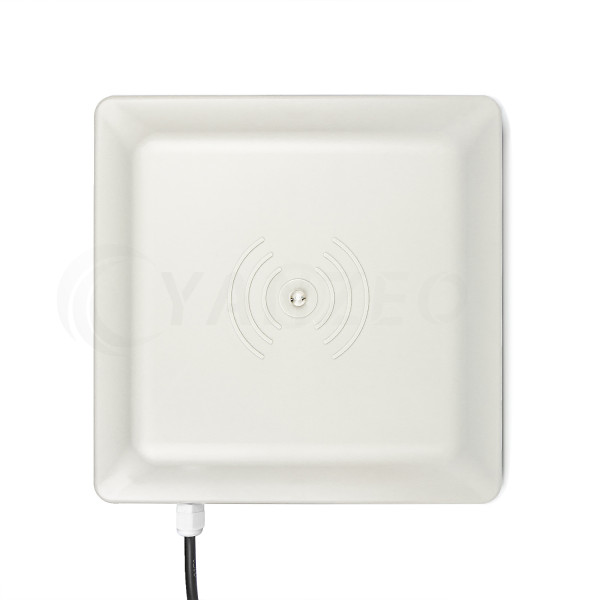
6m Long Range Outdoor IP67 8dbi Antenna RS232/RS485/Wiegand Output
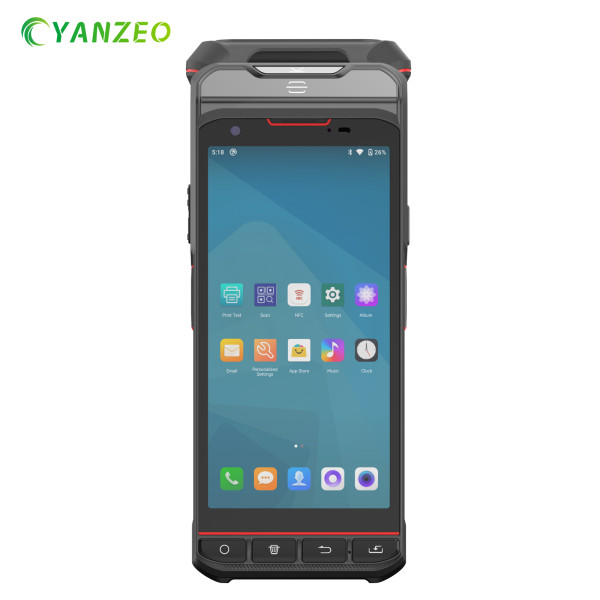
● Android 10 Mobile Computer
● 1D 2D &DPM Barcode Scanning,
● Long Range & High-speed UHF RFID Reading(Impinj E710 )
● Bluetooth, Camera, 10000mAh Battery with Patented Design
● Ultra Rugged, IP68 Sealing and 1.2m drop to concrete
● Used in Retail,Warehousing,Logistics,Inventory
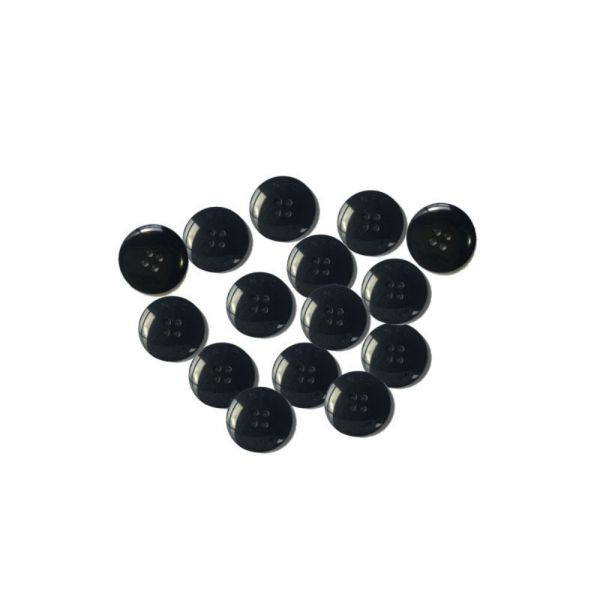
YANZEO 13.56MHz UHF RFID Button Laundry Tag, High-temperature Wear-resistant φ23mm RFID NFC Buttons For Clothing
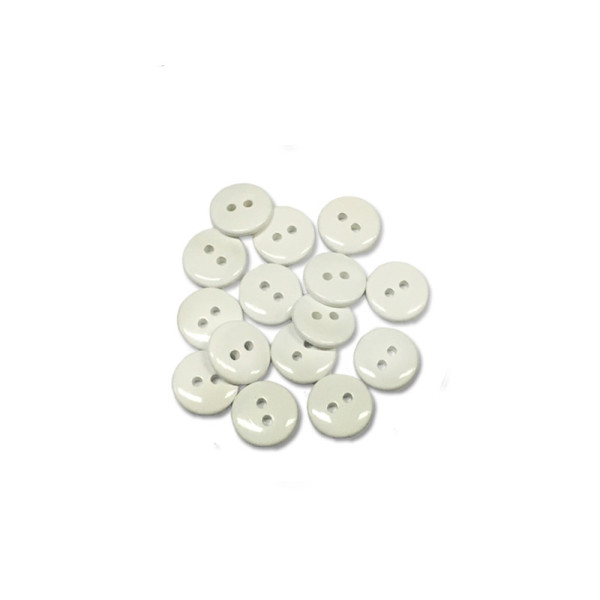
YANZEO 13.56MHz RFID Laundry Button Tag, φ13mm RFID NFC Buttons For Clothing