RFID-Driven Intelligent Upgrade for Urban Parking Management
- Share
- Issue Time
- Jun 3,2026
Summary
This paper presents RFID smart parking combining contactless IC and visual recognition. RF cards include short backscatter & long SAW types for nearly 100% identification. With one-card-one-vehicle & TCP/IP, it auto-manages regular cars and logs temporary vehicles. Modular design enables stable equipment linkage and fault recovery, cutting costs & theft for lots in communities and malls.
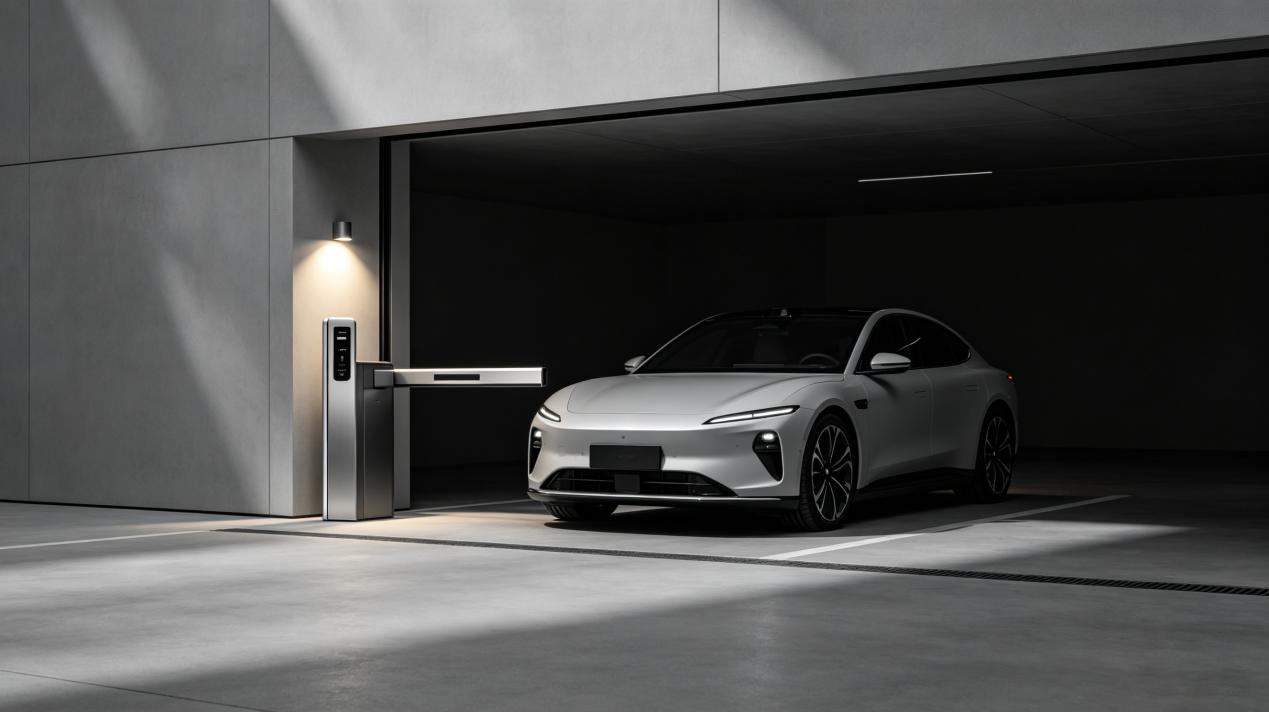
Currently, one of the mainstream RFID technologies applied in smart parking management systems combines contactless IC cards with visual recognition. The system is also equipped with infrared remote access control, anti-theft alarm, reverse parking limiters and other functional modules.
Evolved alongside new identification technologies including IC cards, short-range and long-range wireless RFID cards, this system addresses the drawbacks of magnetic cards and barcodes. It features long service life, easy operation, high durability and strong data security, taking smart parking management to a new level.
The integrated solution of contactless IC cards and visual recognition supports both long-range and short-range card readers, and works with permanent and temporary cards. It enables automatic identification, data recording and storage, effectively preventing financial losses. Combining dual verification via image comparison and IC cards, the technology delivers reliable vehicle anti-theft protection.
RFID Technology & Smart Parking Systems: Higher Safety and Reliability
Another widely adopted technology across the industry is contactless RF card recognition. It inherits the high security and anti-counterfeiting properties of IC cards. No manual card swiping is required, which greatly boosts recognition efficiency. Since the recognition device has no moving mechanical parts, card jams are completely eliminated, resulting in superior system stability.
For commercial parking lots, the reliability of identification systems is critical to overall operation. Hence, read-only contactless RF cards have become the ideal choice for parking management. By manufacturing process, contactless cards fall into two categories: backscatter cards and surface acoustic wave (SAW) cards. In terms of recognition range, they are divided into short-range and long-range RF cards.
Short-range RF cards adopt backscatter technology with an effective recognition distance of 0.3 to 0.6 meters, requiring drivers to hold the card close to the reader. Long-range RF cards apply advanced SAW technology to extend the recognition range and speed, giving full play to the advantages of contactless identification. Vehicles can be recognized within a wide coverage area.
Thanks to its high-speed recognition capability, the system works steadily even when vehicles pass the readers at high speed. Years of operational data show its recognition accuracy reaches nearly 100%.
The combination of the above two technologies effectively reduces human interference and misconduct in parking management. It realizes intelligent and scientific operation for parking lots in communities and campuses, cuts unnecessary costs, improves operational efficiency and safeguards parked vehicles.
Management Mode
The smart parking system follows a one vehicle, one card management rule. All vehicle-related data are uniquely bound to the card ID throughout entry and exit. The system centrally stores user profiles, vehicle models, license plate numbers, body colors, vehicle images, entry & exit time, parking duration, assigned parking spaces, driving routes, payable fees and more in the database for easy query and access.
The whole system is built as a network consisting of management hosts and lane identification devices, adopting the TCP/IP communication protocol. It efficiently, accurately and intelligently identifies, collects, records and stores data of registered vehicles equipped with electronic license plates. For external vehicles without electronic plates, manual assistance is available to upload, process and supplement information. This minimizes the impact of abnormal access and ensures smooth vehicle passage.
The smart parking system is designed to feature high sensitivity, strong environmental adaptability and simple installation, delivering stable performance around the clock regardless of light conditions. It also boasts user-friendly operation, maintenance-free performance and reasonable costs.