Optimizing Retail Management & Customer Experience with Handheld Barcode Scanners
- Share
- Issue Time
- May 16,2026
Summary
Handheld barcode scanners are essential tools for modern supermarkets and convenience stores. They improve checkout speed, inventory accuracy, and sales management while reducing human errors. By enabling fast and efficient product scanning, these devices enhance customer satisfaction and help retailers optimize daily operations. With advanced retail technology, handheld barcode scanners continue to support smarter and more efficient store management.
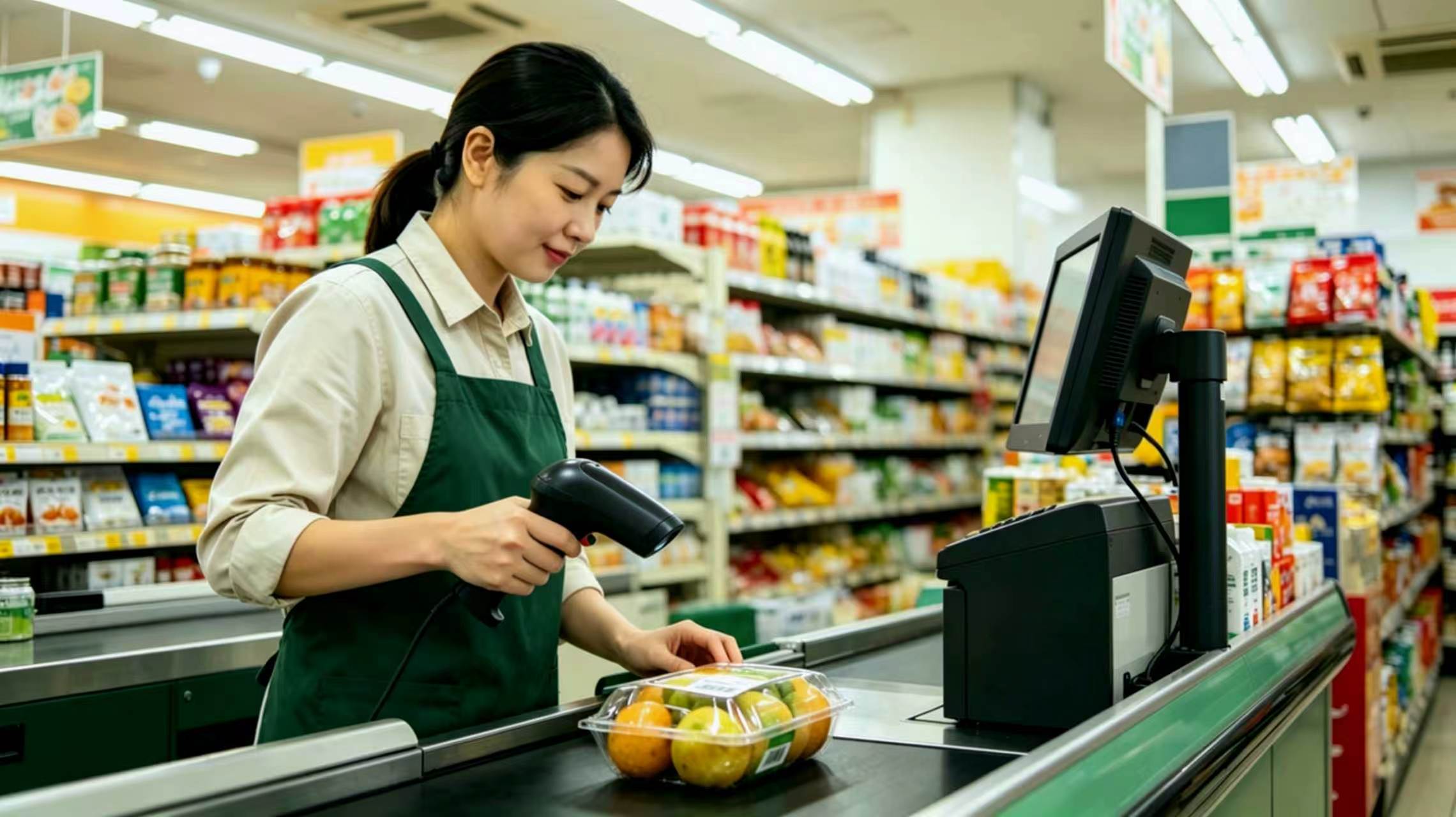
In modern retail, supermarkets and convenience stores attract a large number of consumers with convenient shopping experiences and a wide variety of products. With the rapid development of technology, the operation and management of supermarkets and convenience stores are increasingly reliant on advanced technological tools, among which handheld barcode scanners stand out prominently. By improving the efficiency of merchandise management and optimizing customers’shopping experience, handheld barcode scanners have become an indispensable tool in the modern retail industry.
A handheld barcode scanner is a user friendly compact electronic device. It optically reads barcodes and quickly identifies product information, enabling multiple functions such as fast checkout, inventory management and sales analysis. As an essential identifier of goods, a barcode generally consists of a series of alternating black and white bars that carry information including product codes, manufacturers and prices.
The main functions of handheld barcode scanners are as follows. First, fast checkout. When customers shop in supermarkets or convenience stores, handheld barcode scanners can rapidly scan product barcodes to complete checkout within seconds, greatly shortening queuing time and improving shopping efficiency. Second, inventory management. Merchants can update real time inventory data via handheld barcode scanners to ensure inventory accuracy and avoid stock shortages or overstocking caused by inaccurate stock records. Finally, sales analysis. By analyzing scanned data, retailers can gain in depth insights into product sales performance, formulate more scientific marketing strategies and boost overall sales results.
The application of handheld barcode scanners in supermarkets and convenience stores brings numerous advantages:
Improved Work Efficiency Under traditional checkout methods, cashiers need to manually enter the price of each product, which is time consuming and error prone. Handheld barcode scanners read product information at a much faster speed, greatly boosting checkout efficiency. In addition, for merchants conducting inventory checks and stock management, handheld scanners make the whole process more efficient and accurate.
Reduced Human Errors Manual operations inevitably lead to mistakes. By automatically identifying barcodes, handheld barcode scanners significantly cut down human errors. Especially when there are numerous price tags, scanners ensure accurate price entry, safeguard customers’rights and interests, and enhance consumer satisfaction.
Optimized Customer Experience During shopping, customers usually expect quick checkout and efficient, smooth service. The use of handheld barcode scanners greatly accelerates payment processes, reducing customers’waiting time at checkout counters and improving the overall shopping experience.
Convenient Information Management With the data collection function of handheld barcode scanners, merchants can obtain real time information on product circulation. Based on such data, retailers can analyze market trends and timely adjust product layouts and promotional strategies to adapt to changing consumer demands.
In conclusion, the adoption of handheld barcode scanners in supermarkets and convenience stores not only improves merchandise management efficiency but also optimizes customers’shopping experience. With continuous technological advancement, the functions and application scenarios of handheld barcode scanners will keep expanding, bringing new opportunities to the retail industry. Merchants should actively embrace this technological transformation to enhance competitiveness and meet consumers’diverse needs.